Holidays
Public holidays decide which days count as expected working time. They feed the employee report and the working-time rules in employee time.
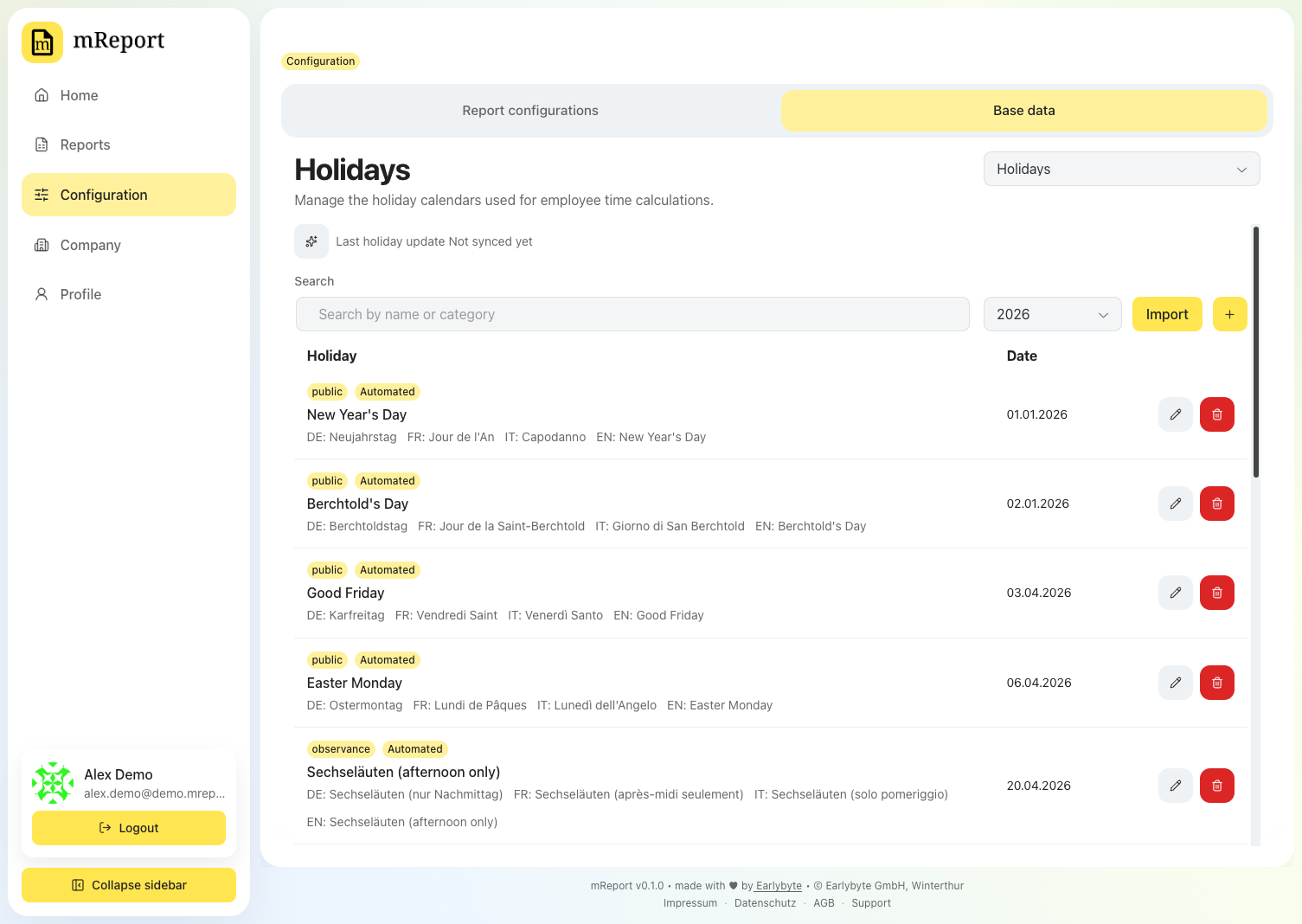
Importing a calendar
Import holidays looks up the public holidays for a location — country, postcode and town, because Swiss holidays differ by canton and even by municipality. The lookup is AI-generated rather than an official feed, so the result needs checking.
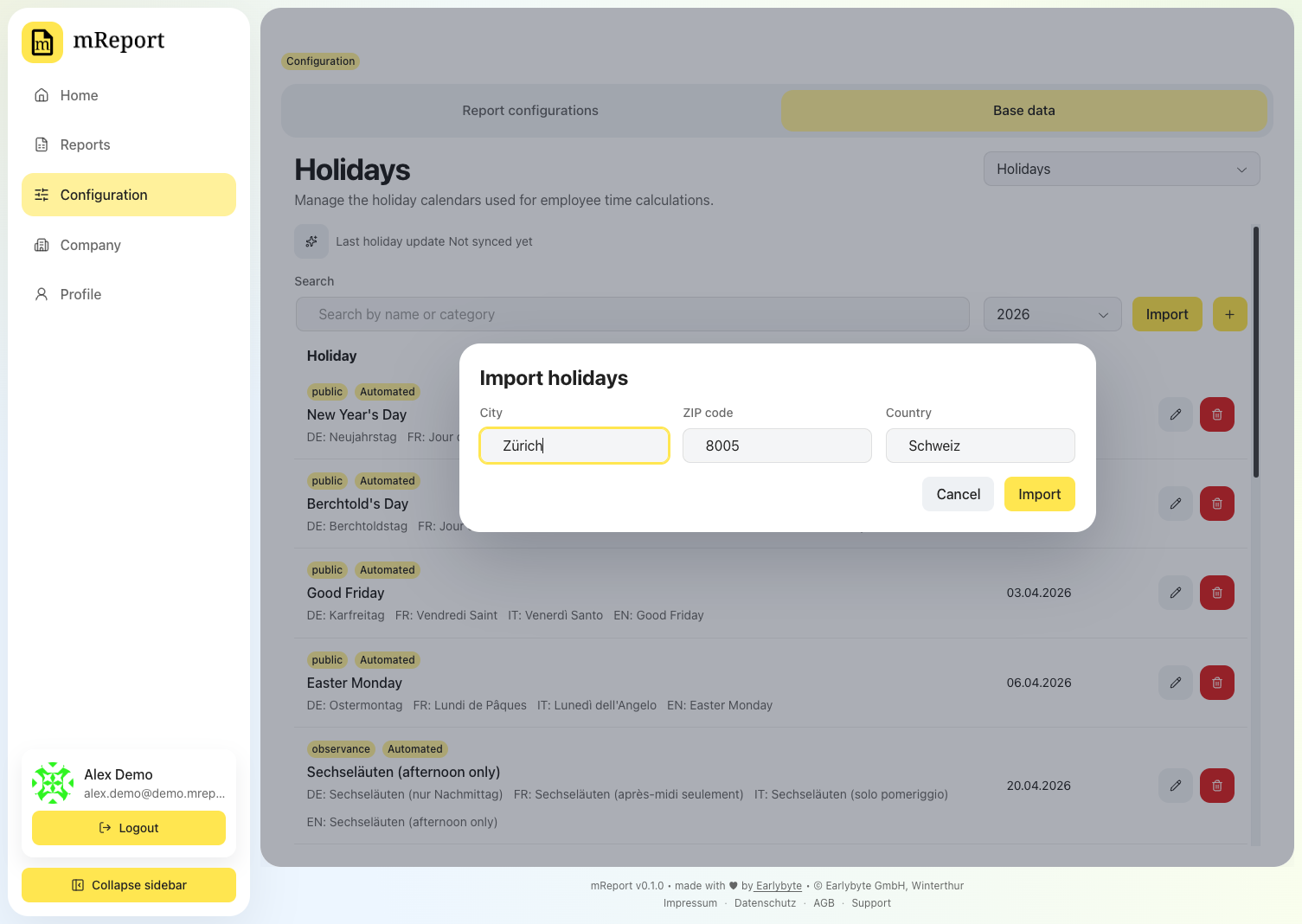
Imported entries have source Automated. Their dates move each year (Good Friday, Whit Monday), so Update automated dates recalculates them.
Check an imported calendar — it will not be perfect
The import is AI-assisted, not an official feed. It can miss a holiday, or add one that does not apply to your location. Treat the result as a strong first draft, not as gospel — a wrong calendar quietly changes the expected hours of every employee report for that year.
- Something wrong? Delete the entry, or switch its Active toggle off.
- Something missing? Add it by hand, and set its source to Automated. mReport then looks the date up from the holiday name for your location, so it also keeps moving with the year — Good Friday and Whit Monday change date annually.
- A Custom entry keeps whatever date you typed and is never touched by an update.
Reviewing the list once per year takes a few minutes and is worth doing. The import saves most of the work; it does not remove the need to look.
Adding one by hand
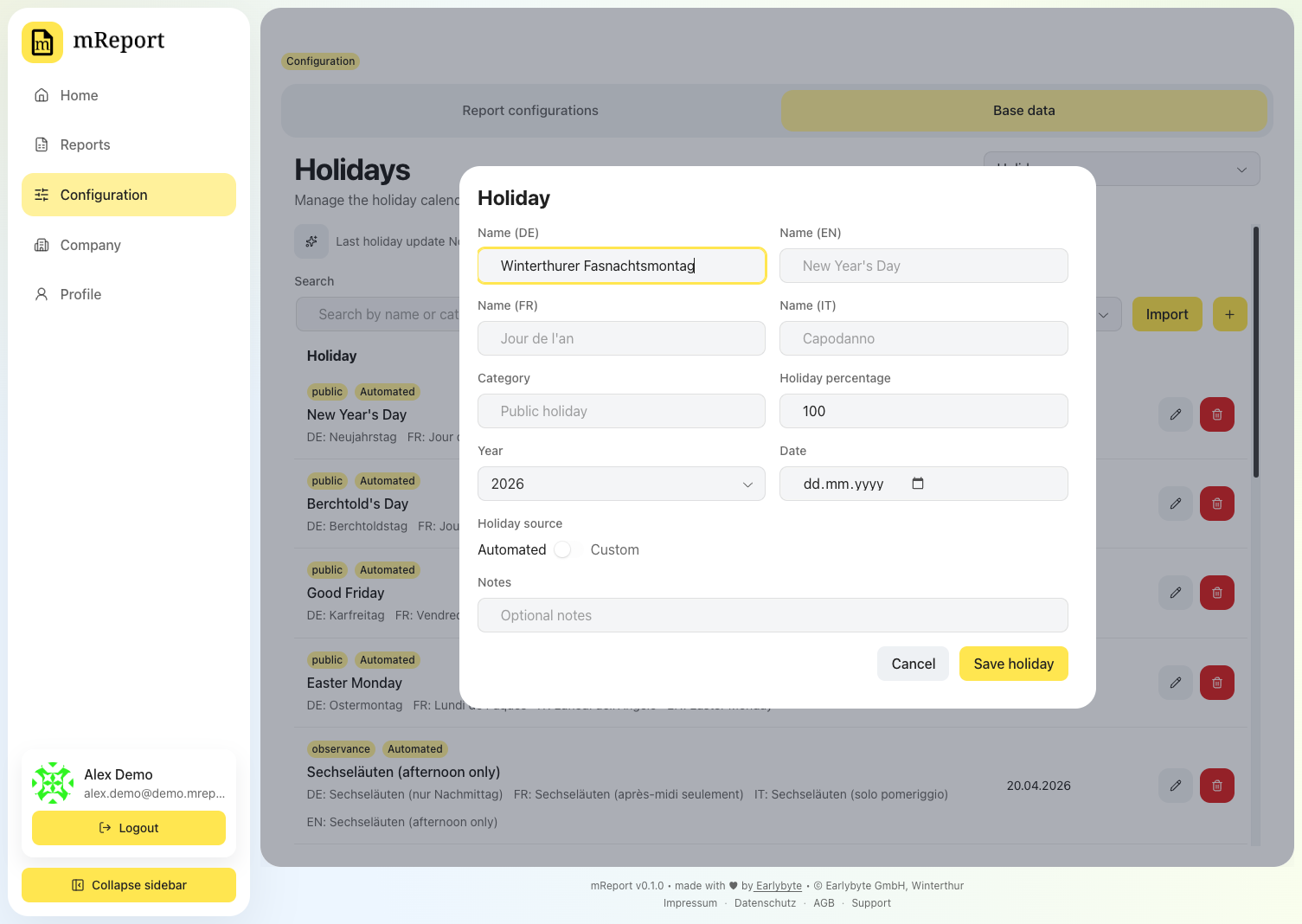
Add holiday creates a Custom entry — company holidays, bridge days, a local festival. An automated entry shows its source and can still be renamed or disabled:
Buttons
| Control | Effect |
|---|---|
| Import holidays | Looks up holidays for a location and year, using AI |
| Update automated dates | Recalculates moving holidays; never touches Custom entries |
| Add holiday | Creates a Custom entry |
| Active toggle | A disabled holiday stays in the list but counts as a normal working day |
A holiday is per year
Each year has its own list. After importing 2026 you still need 2027 — the employee report shows expected hours only for years that have a calendar.